



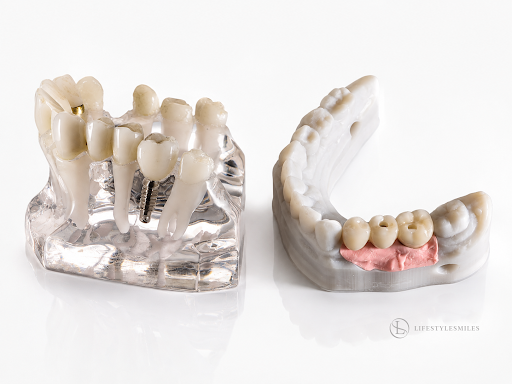
Implant healing follows an incremental process rather than occurring simultaneously. In terms of surgery, the recovery process lasts one to two weeks, while bone integration may take three to six months. Most of the pain after dental implants can be easily managed with rest, ice packs, and soft foods at first. The following guide will help you understand the process of recovery after dental implants and the signs of normal healing and when to contact your dentist.
Recovery is Not a Single Milestone
If you have recently gotten or are going to receive your dental implant, it is important to realize that the process of recovery occurs in several layers rather than being a single milestone. The initial recovery process will take one to two weeks, although under the gums the implant will continue to fuse with your jawbone for several months.
It’s important to know the timeline so that expectations week by week are appropriately adjusted. Getting back to feeling like oneself in two weeks does not indicate that the dental implant has finished its process of healing. Understanding that at the beginning will prevent unnecessary worry or even a hasty return to hard foods which are not yet suitable for the implant. The following article covers the stages of dental implant healing and care in Brighton.
What Should You Expect in the First 24-48 Hours?
Usually, in the first 2 days after the procedure, there is swelling, slight bleeding, and also mild pain due to the dissipation of local anaesthesia. Swelling reaches its peak in 48 hours and then will start to decrease. During this period, it is necessary only to protect the wound area. Ice packs should be used in short intervals to control the swelling. Also, take the pain medications that are prescribed by your dentist, but do not wait for pain to develop. During this period, it is better to rest since your body heals.
The First Two Weeks: Soft Tissue Healing
The majority of healing seen during the first 1-2 weeks after the procedure involves gum healing, where the gums heal and grow around the wound. At the conclusion of this phase, the sensitivity will have lessened greatly, and any everyday pain experienced will have been eliminated.
During this time period, diet is particularly important. Consuming soft, cold food items reduces the amount of pressure placed on the healing gum tissue, and therefore the risk of irritation to the area. For this reason, dentists usually advise patients to resume their regular diet slowly and not rush into eating hard and crunchy items. Another factor that needs to be considered is oral hygiene, which should be gentle and careful, with no avoidance of the area around the implant.
Osseointegration: The Months-Long Part of Recovery
Osseointegration is the process where the titanium implant fuses directly with your jawbone, and it’s what actually gives an implant its long-term strength, typically taking three to six months to complete. This is the part of recovery that doesn’t feel like anything, which is exactly why it’s easy to forget it’s still happening.
Once the initial soreness fades after a couple of weeks, most people go back to their normal routine and barely think about the implant again until their next appointment. That’s actually the point. Osseointegration is a quiet, biological process rather than something you feel day to day, but it’s the reason your dentist won’t rush to attach a permanent crown before the implant has properly bonded with the bone underneath. You can read more about how the implant process works from start to finish.
Aftercare Tips That Actually Matter
Good aftercare during dental implant recovery comes down to a handful of habits: gentle but consistent oral hygiene, avoiding smoking, sticking to soft foods early on, and turning up to every follow-up appointment your dentist schedules. Skipping any of these is one of the more common reasons recovery takes longer than it should.
Smoking is worth calling out directly, since it restricts blood flow to the healing site and is one of the clearest risk factors for slower healing or implant complications. Even a temporary break around surgery can genuinely change your recovery experience. Beyond that, avoid straws in the first week, since suction can disturb the surgical site, and steer clear of vigorous rinsing or spitting for the same reason.
Follow-up appointments matter more than they might seem to. They’re how your dentist confirms healing is on track before moving to the next stage of treatment. At Lifestyle Smiles, our Principal Dentist, Dr Warren Antonoff, and the team check in at each stage to make sure everything is progressing as it should.
What’s Normal vs What’s a Warning Sign?
Mild swelling, light bleeding, and manageable discomfort in the first few days are all a normal part of dental implant recovery, but ongoing severe pain, heavy bleeding, or swelling that gets worse rather than better after 72 hours isn’t, and should prompt a call to your dentist. Trusting your instincts here matters. You know your own body better than a general timeline can predict.
A low-grade ache easing day by day is expected. A sharp increase in pain a week in, or a bad taste and swelling that doesn’t settle, are the kinds of signs worth getting checked rather than waiting it out. Catching a potential infection or complication early is almost always more straightforward to manage than leaving it and hoping it resolves on its own.
When Do You Get Your Final Crown?
Your final crown is usually fitted only once osseointegration is confirmed, which is generally at the three- to six-month mark, since attaching it too early risks disturbing the implant before it’s properly fused with the bone. This is the step that turns the implant from a healing surgical site into something that looks and functions like a natural tooth.
The wait can feel long if you’re eager to see the finished result, but it exists for a good reason. An implant that hasn’t fully integrated isn’t stable enough to reliably support a crown yet, and rushing this stage risks the kind of complications that are far more disruptive than a few extra weeks of patience. Once your dentist confirms everything has healed as expected, the crown fitting itself is usually straightforward and doesn’t involve further surgery.
Settling Into Your New Smile
Dental implant recovery takes patience, but understanding the timeline makes the process far less uncertain. The first two weeks are about looking after the surgical site, the following months are about letting osseointegration happen quietly in the background, and the final step is your crown, fitted once your dentist confirms everything has healed properly.
If you’re currently recovering from a dental implant, or you’re planning one and want a clearer picture of what to expect, our Brighton dentist is here to help.